EN
EN


- Overview
- Recommended Products
Product Details

Company and Service Advantages:




We are the first drafter of the China National Standards for 3D Panel.
We cooperated with a German manufacturer where the first EPS block molding machine in the world was produced in 1960.
We have a joint venture with Alessio Hi-tech, a leading Italian company for shape molding and pre expansion technology of EPS and EPP.
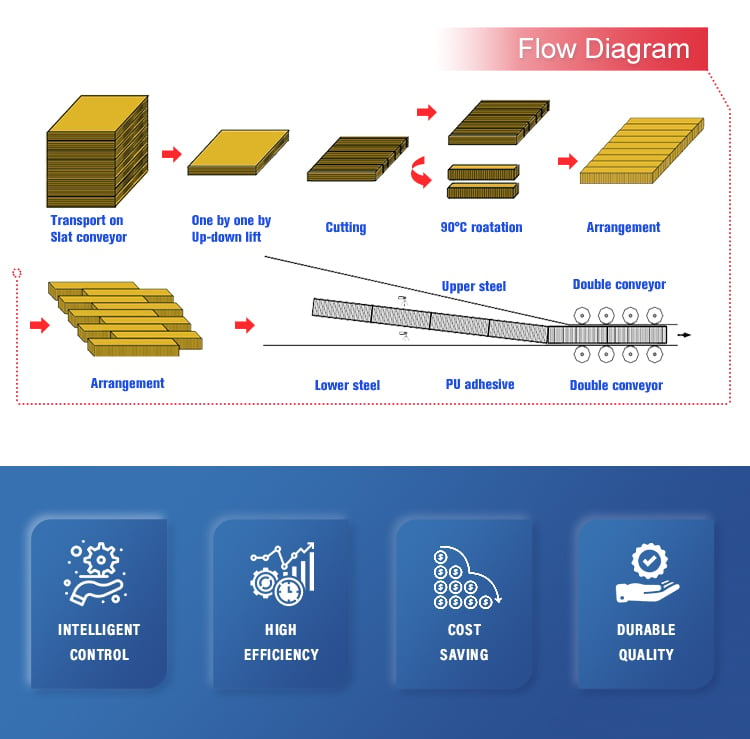
We have Korean Hi-tech for continuous sandwich panel line with core in Polyurethane, Mineral Wool, Phenolic or EPS. Ten overseas branch offices are responsible for the worldwide sales and after-sales services.
We warmly welcome friends and all those who are interested in our products and services to visit our factories in Shanghai, China.


 Shanghaizhongji presents the Glass Fiber Reinforced Plastic Resin Dispenser, a next-generation solution engineered for precision, durability, and scalability in composite manufacturing. Designed to meet the rigorous demands of modern production environments, this FRP resin dispenser integrates advanced dosing controls, robust construction, and adaptable interfaces to ensure consistent, reliable delivery of resin systems used in fiberglass, carbon fiber, and hybrid composite applications.
Product Overview and Core Features
The Glass Fiber Reinforced Plastic Resin Dispenser by Shanghaizhongji is a specialized composite material dispenser built to handle a wide range of thermosetting resins, gel coats, and specialty additives. As an industrial resin dosing solution, this unit offers precise volumetric and gravimetric dosing modes, ensuring accurate mixing ratios for multi-component resin systems. The dispenser’s high-precision metering pumps and digital control algorithms allow for minimal deviation in component ratios, reducing waste and improving part quality across production runs.
Key features include:
- Multi-component dosing: Support for two- to four-component resin systems with independent pump control.
- High-precision metering: Low pulsation gear or progressive cavity pumps calibrated for consistent output.
- Adaptive control logic: PID and closed-loop feedback for real-time correction and stability in industrial resin dosing.
- Temperature management: Integrated heating and insulation options to maintain resin viscosity and flow characteristics.
- Modular architecture: Configurable modules for scaling from bench-top trials to full production lines.
- User-friendly HMI: Touchscreen interface with recipe management, traceability, and batch reporting.
- Robust materials: Corrosion-resistant wetted parts compatible with FRP resin chemistries and abrasive fillers.
- Maintenance access: Quick-disconnect fittings and service-friendly layout for reduced downtime.
Applications and Industry Use Cases
This composite material dispenser is ideal for a broad spectrum of applications where precision and reliability are paramount. Typical use cases include:
- Fiberglass boat hull and marine component manufacturing requiring consistent fiberglass resin dosing.
- Wind turbine blade layup, where large-scale fiberglass resin dosing and tight tolerances drive structural integrity.
- Automotive composite parts production, using fiberglass or hybrid reinforcements that depend on accurate industrial resin dosing.
- Sports equipment fabrication, where consistent fiberglass resin dosing ensures repeatable mechanical properties and surface finish.
- Infrastructure components such as FRP grating and panels, benefiting from uniform fiberglass resin dosing to meet performance specifications.
- Molded parts and Pultrusion lines that require continuous, automated composite material dispenser systems to maintain throughput and quality.
Technical Innovations and Advantages
Shanghaizhongji’s Glass Fiber Reinforced Plastic Resin Dispenser delivers several technological advantages over conventional dispensers and manual processes. Its innovations focus on precision control, material compatibility, and long-term operational efficiency
Precision and consistency: The dispenser’s metering technology minimizes ratio drift and ensures reproducibility, reducing the risk of under- or over-catalyzation and the associated rejects. This precise control is particularly important in fiberglass resin dosing where mechanical properties and cure profiles are sensitive to mix ratios.
Material adaptability: Designed to handle a wide range of resin chemistries used in FRP applications, the unit supports polyester, vinyl ester, epoxy, and specialty gel coats. The composite material dispenser’s wetted components are selected to resist chemical attack and particle abrasion, enabling longer service life when dosing filled or thixotropic resins.
Scalability and throughput: The modular design allows manufacturers to scale capacity by adding pump modules or integrating multiple dispensers into larger production cells. The industrial resin dosing platform supports continuous operation, enabling Pultrusion, filament winding, and automated layup processes to maintain high throughput without sacrificing accuracy.
Process integration and traceability: The dispenser’s control system features recipe management, batch logs, and connectivity options for factory automation. This enables full traceability of industrial resin dosing operations, aligning with quality systems and regulatory compliance requirements.
Reduced waste and improved economics: By minimizing overuse of resin and ensuring accurate additive dosing, the composite material dispenser reduces material costs and scrap rates. Better first-pass yields and consistent cure performance translate into lower operational expenses and higher profitability.
User Experience and Operational Benefits
The Glass Fiber Reinforced Plastic Resin Dispenser focuses on usability to shorten operator training time and reduce human error. The intuitive HMI provides step-by-step workflows, visual alerts, and guided maintenance schedules. Recipe storage lets operators recall exact mix parameters, minimizing setup time between batches. Remote monitoring capabilities enable maintenance teams and process engineers to diagnose issues, adjust parameters, and track consumption trends without being physically present at the dispenser.
Safety and environmental considerations are integrated into the design. The dispenser includes sealed reservoirs, vapor capture options, and automated purge cycles to limit resin exposure and reduce VOC emissions. Leak detection and emergency shutdown features protect personnel and equipment, while easy-to-clean surfaces and accessible filters simplify housekeeping.
Customization and Support
Shanghaizhongji offers tailored configurations to meet specific production needs. Custom options include specialized pump types for high-viscosity or filled resins, heated lines for temperature-sensitive systems, and reinforced frames for integration into automated gantry or robotic cells. The company provides comprehensive start-up support, training programs, and preventive maintenance packages to ensure customers achieve optimal performance from their composite material dispenser investment.
Why Choose Shanghaizhongji’s FRP Resin Dispenser
Manufacturers seeking dependable fiberglass resin dosing and a versatile industrial resin dosing platform will find this dispenser an effective solution. The combination of high-precision metering, material compatibility, modular scalability, and robust control makes it well-suited for demanding FRP production environments. With shanghaizhongji’s emphasis on engineering excellence and after-sales support, companies can reduce cycle times, improve product consistency, and lower operational costs.
The Glass Fiber Reinforced Plastic Resin Dispenser from Shanghaizhongji is a purpose-built composite material dispenser engineered to advance modern FRP manufacturing. It offers precise fiberglass resin dosing, flexible industrial resin dosing capabilities, and scalable configurations that support a wide range of composite production processes. By integrating cutting-edge metering, adaptive controls, and operator-centric features, this FRP resin dispenser helps manufacturers achieve repeatable quality, operational efficiency, and long-term cost savings in fiberglass and composite component production.